Mesh, Kevlar jeans, textile, or leather — which actually lasts longer and costs less per year? Real lifespan data, cost-per-year math, and material comparison no one else covers.
Table of Contents
You spent good money on gear. You wear it every ride. Then one slide — or just two summers of sun — and it’s done. The problem isn’t that gear wears out. It’s that nobody told you which material was going to wear out in three years and which one was going to last twelve.
Most guides compare prices. Nobody runs the actual cost-per-year math across all four materials or tells you which one you can wear again after a crash. As a manufacturer producing all four, we see exactly where each one starts failing — usually long before the rider notices
The Four Materials — What You’re Actually Buying
Riders choose between mesh, Kevlar-lined denim, textile, and leather. Each behaves differently under daily use, sun exposure, washing, and impact. Treating them as interchangeable is where most buying decisions go wrong.
What Each Material Actually Is
Mesh — woven polyester, typically 300D to 600D fabric denier. Moves air, packs flat, weighs almost nothing
Leather — full-grain or split-grain cowhide, 0.8mm to 1.4mm thick. Highest abrasion resistance of the four
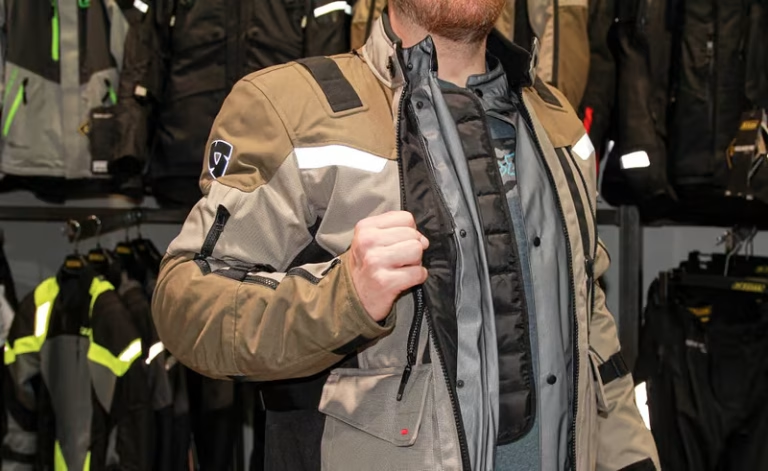
Textile — Cordura or Oxford weave with a waterproof membrane bonded or inserted inside. The all-weather middle ground
Kevlar jeans — standard cotton denim on the outside, aramid fiber lining at the knees, hips, and seat underneath
Are Mesh Jackets Worth It — The Honest Answer
For riders in warm climates doing daily commutes under 60mph, yes. For highway touring above 70mph, the answer gets more complicated.
What Makes a Mesh Jacket Actually Worth Buying
Mesh jackets worth their price have at minimum:
600D polyester outer panels — not 300D
Full armor pockets at shoulders and elbows
Back protector pocket included
Scotchlite or reflective elements on outer panels
Below that spec, you are buying ventilation without meaningful abrasion resistance. Fabric denier matters here — 300D mesh abrades through in under two seconds of road contact at 60mph. At 600D, that extends to roughly three to four seconds, which is the difference between road rash and deeper tissue damage in a standard low-side.
The UV Problem Nobody Mentions at Point of Sale
Polyester mesh left in direct sun for 18 to 24 months loses tensile strength progressively. The jacket looks fine from the outside. The fiber structure isn’t. Seam strength drops before the fabric visibly fails.
Indoor storage: three to five year lifespan
Outdoor or hot garage storage: replace at two years regardless of appearance
UV degradation accelerates in high-humidity climates
Kevlar Jeans vs Leather — Where Each One Actually Wins
Kevlar jeans worth buying sit in a specific use case: urban and commuter riding where you need to walk into a building without changing. The aramid lining handles abrasion well — DuPont Kevlar fiber tests at significantly higher slide resistance than standard denim or mesh — but the outer cotton denim still abrades and tears on contact. You stay protected underneath while the outer layer sacrifices itself.
Where Leather Has the Clear Advantage
Leather wins on abrasion resistance by a measurable margin. Full-grain cowhide at 1.2mm handles slide distances that destroy mesh or denim outer layers. A single low-side at 50mph that ruins a mesh jacket may leave a leather jacket repairable.
That single crash versus multiple crash survivability difference is real:
Leather — clean and often wear again after minor slide
The trade-offs on the leather side are real too — heat retention above 25°C becomes a problem fast, packability is essentially zero, and resale value drops sharply after any visible damage.
Kevlar Jeans vs Textile — The Daily Riding Comparison
From our factory floor, the abrasion resistance gap between Kevlar and textile depends entirely on coverage area — full-leg lining changes the math significantly compared to knee-and-hip-only builds.
Which One Works for Commuting
Textile jackets and pants paired together give you:
Weather protection across rain, wind, and cold
Armor integration at all major impact zones
Breathability through zippered vents
Waterproof membrane for year-round use
Kevlar jeans give you one thing textile cannot — the ability to sit in a meeting, café, or office without looking like riding gear. For commuters who ride in and walk straight into work, Kevlar jeans are the practical answer. For riders doing mixed urban and motorway riding in variable weather, textile wins on versatility.
Cost Per Year — The Math Nobody Runs
Material
Price Range (Retail)
Realistic Lifespan
Cost Per Year
Mesh jacket
Lowest entry cost
3–4 years
$20–40
Kevlar jeans
Medium
4–6 years
$25–50
Textile jacket
Medium-High
5–8 years
$30–55
Leather jacket
Highest
8–15+ years
$20–50
Based on US retail averages. Wholesale and OEM pricing available for brands.
What the Table Doesn’t Show
Leather has the lowest cost per year at the top end of its lifespan — but only with proper maintenance and no significant crash damage. One slide that damages the hide changes that math immediately. Mesh has the lowest entry cost but the shortest lifespan, particularly in high-UV climates. Resale value follows the same pattern — leather holds resale value better than any other material if condition is maintained. Mesh and textile have near-zero resale after three years.
Which Material Survives a Second Crash
This is the question that separates long-term investment thinking from single-purchase decisions.
Survivability by Material
Leather — repairable after minor slides, potentially wearable. Major slides require professional patching but the garment can survive
Textile — outer Cordura layer abrades but waterproof membrane and inner construction often remain intact. Armor pockets may tear. Repairable in most cases
Kevlar jeans — aramid lining compresses and loses structure after significant abrasion contact. Outer denim gone. Protection compromised. Replace after any real slide
Mesh — outer panels abrade through quickly. Armor pockets may survive. The jacket itself does not. Single crash material above 40mph
Material
Abrasion Time at 60mph
Survives Second Crash
Mesh 600D
3–4 seconds
No
Kevlar jeans lined
5–7 seconds
No — lining compressed
Textile Cordura 600D
5–8 seconds
Maybe — repairable
Leather 1.2mm
8–12+ seconds
Yes — if minor slide
Source: Manufacturing material testing, industry standard abrasion data.
Which One Should You Actually Buy
By Riding Style
Hot climate urban commuting under 60mph — mesh is the practical answer
Office commuting where gear needs to pass off the bike — Kevlar jeans
Year-round mixed weather riding — textile covers the most ground
Regular long-distance riding with a ten-year view — leather at the lowest cost per year
We manufacture all four. The honest answer: no single material wins. Buy two — one for warm weather, one for everything else. The riders who spend the least over time are not the ones who found the cheapest jacket. They’re the ones who matched the material to the actual riding conditions.
Saribco Industries produces mesh, Cordura textile, Kevlar-lined denim, and leather motorcycle apparel — and the lifespan differences between them are visible at the construction stage before the garment reaches a rider.
Kevlar jeans in hot weather, mesh vs perforated leather heat, textile vent timing, UV damage on fibers — everything hot climate riders need to know before summer riding.
Textile jacket repair, zipper replacement, armor pocket fixes, and leather patching — what you can fix, what you can’t, and what it costs versus buying new.
Are textile jackets safe on highways? Are mesh jackets safe at speed? Real abrasion data, slide distances, women’s fit gaps, and honest material safety comparison.
Can you wear a mesh jacket in winter? Yes — if you layer correctly. Wind chill math, thermal base layers, liner compatibility, and what to wear under a textile jacket explained.
Step-by-step washing guide for Kevlar jeans, textile jackets, and mesh gear. Armor removal, detergents to avoid, drying methods, and how to stop membrane damage before it happens.
Mesh, Kevlar jeans, textile, or leather — which actually lasts longer and costs less per year? Real lifespan data, cost-per-year math, and material comparison no one else covers.