Kevlar jeans in hot weather, mesh vs perforated leather heat, textile vent timing, UV damage on fibers — everything hot climate riders need to know before summer riding.
Table of Contents
Best Motorcycle Gear for Hot Weather? What Actually Keeps You Cool and Protected:
Riding in serious heat is not uncomfortable. It is dangerous. Heat exhaustion on a motorcycle happens faster than most riders expect — and the gear you’re wearing either helps manage that or makes it worse. Picking the wrong material for a hot summer ride is not just a comfort mistake.
Here is what each material actually does above 30°C — and which one wins depends on whether the air is dry or humid.
Dry Heat vs Humid Heat: Why It Changes Everything
This is the gap no hot weather gear guide addresses. Breathability performs completely differently depending on whether the air is dry or humid.
In dry heat, airflow across the skin carries sweat away and cools the body through evaporation. Mesh works exceptionally well here — air moves through the panels, contacts damp skin, and the evaporative cooling effect is significant.
In humid heat, the air is already saturated with moisture. Sweat does not evaporate efficiently regardless of how much airflow you have. Mesh still moves air but the cooling benefit drops considerably. At above 80% humidity, the difference between mesh and well-vented textile narrows more than most riders expect.
Understanding which condition you ride in most changes which material makes sense for your climate.
Kevlar Jeans in Hot Weather: Better Than You Think
Kevlar jeans perform better in heat than their construction suggests. Cotton denim breathes reasonably well on its own. The aramid lining underneath adds minimal heat retention because it sits against the skin only at the knee and hip panels — not across the full leg on most builds.
The real heat problem with Kevlar jeans is colour and weight. Dark denim absorbs solar radiation significantly more than light colours. On a 35°C day in direct sun, black Kevlar jeans are noticeably hotter than mid-wash or light grey denim with identical construction. If you ride in heat regularly, lighter coloured Kevlar jeans are a straightforward improvement without any change to protection.
Full-leg Kevlar lining does add warmth compared to knee-and-hip-only builds. In extreme heat above 38°C, knee-and-hip-only lining is the more comfortable option while still covering the primary impact zones.
What works for Kevlar jeans in hot weather:
Light or mid-wash denim — reduces solar heat absorption
Loose cut above the knee — allows air circulation between fabric and skin at low speeds
Textile vs Mesh in Hot Weather: Which One Actually Wins
At temperatures below 28°C, a textile jacket with vents open is competitive with mesh on comfort. Above 32°C, mesh pulls ahead clearly. Above 38°C, textile with vents open is still noticeably hotter than mesh regardless of ventilation panel quality.
The reason is simple. Cordura outer shell absorbs and retains solar heat. Mesh outer panels do not — they have no solid surface to absorb it. That difference becomes significant in direct sun at riding speeds above 40mph.
Breathability by Fabric Type — Dry vs Humid Heat
Material
Dry Heat Performance
Humid Heat Performance
Open mesh 600D
Excellent
Good
Perforated leather
Good
Moderate
Textile with vents open
Moderate
Moderate
Textile with vents closed
Poor
Poor
Solid leather
Poor
Poor
In dry heat above 35°C, mesh is the clear winner. In humid heat above 35°C, the gap between mesh and well-vented textile narrows — but mesh still leads. Perforated leather sits between the two in both conditions.
Textile Ventilation Zipper Use: When to Open and When to Close
Most riders treat vents as fully open in summer and fully closed in winter. That approach wastes most of what ventilation zippers actually do.
Below 30mph — open all vents. Airflow at low speed is insufficient to create meaningful wind chill even in mild temperatures. Maximum ventilation at low speed is always the right call.
30mph to 50mph — adjust based on temperature and sun exposure. In shade, partial vent closure maintains comfort. In direct sun above 32°C, keep all vents fully open.
Above 60mph — chest vents create turbulence inside the jacket on some designs above this speed, which works against cooling. If the jacket feels like it is ballooning at motorway speeds with vents open, partially close the chest vents and keep the back and underarm vents open. Back vents extract hot air that rises from the body more efficiently at speed than chest vents push cool air in.
Above 38°C ambient at any speed — open everything and accept that textile ventilation has reached its limit. At this temperature a mesh jacket is the functionally correct choice if protection allows.
Mesh Jacket vs Perforated Leather: Which Is Cooler
In dry heat, open mesh is cooler. The comparison is not close — full open-weave panels versus perforations in solid hide. Airflow through mesh panels is significantly higher.
In humid heat above 35°C, the gap narrows. Perforated leather at 1.0mm thickness with dense perforation patterns moves more air than most riders expect, and the hide does not trap body heat against the skin the way a solid Cordura shell does.
The protection trade-off runs the opposite direction. Perforated leather at 1.2mm holds up for eight to twelve seconds at 60mph. Mesh 600D holds up for three to four seconds. In summer heat where both are being considered, that gap in abrasion protection is worth factoring into the choice alongside the temperature difference.
For riders doing highway speeds in dry summer heat — perforated leather gives you better protection with acceptable heat penalty. For urban riding in humid heat under 50mph — mesh is cooler and the abrasion gap matters less at those speeds.
Do Mesh Jackets Fade in Sun: UV Damage Explained
Yes — and the structural damage happens before the visible fading does.
Polyester mesh loses tensile strength under sustained UV exposure progressively. The fiber weakens from the outside in. Seam strength at panel joins drops measurably after 18 months of regular sun exposure — even without washing or crash damage. The jacket looks acceptable. The fiber isn’t performing to original specification.
UV damage accelerates with:
Direct sun storage — jacket left on the bike or in a hot vehicle
Line drying in direct sunlight repeatedly over months
High UV index climates — equatorial and desert regions accelerate degradation significantly faster than temperate climates
Scotchlite reflective elements on mesh panels do not provide UV protection to the base fabric. They reflect visible light and improve rider visibility — a different function entirely.
How to Slow UV Degradation on Mesh Gear
Store indoors away from windows when not riding
Line dry in shade only — never in direct sun
UV-protective spray treatments for polyester fabric extend surface fiber life — products like 303 Fabric Guard apply a UV inhibitor to synthetic fabrics
Replace mesh outer panels or the full jacket at three to four years in high-UV climates regardless of visible condition
Sunburn Protection: What Gear Actually Blocks UV rays
This comes up less than it should. Mesh panels at open weave density do not provide meaningful UV protection to the skin underneath. The UPF rating of open-weave 600D polyester mesh is low — solar radiation passes through the gaps in the weave and reaches the skin.
Riders in high-UV climates doing long days in mesh jackets can sunburn through the jacket on exposed forearms and the back of the hands if the mesh weave is open enough. Wearing a long-sleeve base layer underneath a mesh jacket solves this — it adds a UV blocking layer against the skin, manages sweat, and adds minimal heat in dry conditions.
Textile jackets block UV effectively across the Cordura outer shell. Perforated leather blocks UV at the solid hide sections — the perforations leave small exposed areas but coverage is significantly better than open mesh.
Cleaning Around Zippers in Hot Weather Gear
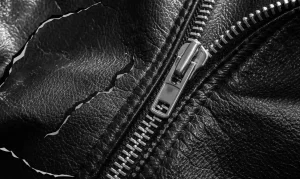
Heat and sweat accelerate salt and mineral deposit buildup around zipper teeth, particularly on chest vents and entry zips that open and close repeatedly in humid conditions. Salt deposits corrode zipper metal and cause the slider to bind over time.
Cleaning ventilation zippers on hot weather gear:
Brush zip teeth with a soft toothbrush before washing to dislodge debris
Machine wash closed on gentle cycle — open zips snag surrounding fabric
After washing, apply a small amount of zip lubricant to the teeth — McNett Zip Tech or equivalent works on both plastic and metal YKK hardware
Never force a stiff zip — binding usually means salt or debris in the teeth, not a failed mechanism
Zippers on hot weather gear need cleaning attention more frequently than on winter jackets because sweat volume is higher and salt concentration in sweat increases in heat.
Saribco Industries manufactures MeshTech 600D jackets and pants specifically for hot climate markets — Gulf, Australian, and equatorial buyers consistently specify the open-weave panel construction and Scotchlite reflective elements for visibility in high-glare conditions. The ventilation panel placement in those designs comes directly from heat management testing in high-temperature environments, not from temperate climate assumptions.
Kevlar jeans in hot weather, mesh vs perforated leather heat, textile vent timing, UV damage on fibers — everything hot climate riders need to know before summer riding.
Textile jacket repair, zipper replacement, armor pocket fixes, and leather patching — what you can fix, what you can’t, and what it costs versus buying new.
Are textile jackets safe on highways? Are mesh jackets safe at speed? Real abrasion data, slide distances, women’s fit gaps, and honest material safety comparison.
Can you wear a mesh jacket in winter? Yes — if you layer correctly. Wind chill math, thermal base layers, liner compatibility, and what to wear under a textile jacket explained.
Step-by-step washing guide for Kevlar jeans, textile jackets, and mesh gear. Armor removal, detergents to avoid, drying methods, and how to stop membrane damage before it happens.
Mesh, Kevlar jeans, textile, or leather — which actually lasts longer and costs less per year? Real lifespan data, cost-per-year math, and material comparison no one else covers.