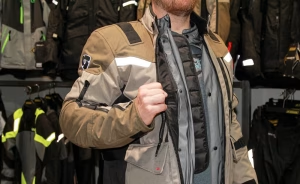
Step-by-step washing guide for Kevlar jeans, textile jackets, and mesh gear. Armor removal, detergents to avoid, drying methods, and how to stop membrane damage before it happens.
Table of Contents
How to Wash Motorcycle Gear Properly Without Destroying It
Most riders wash their motorcycle gear the same way they wash their casual jeans. Then they wonder why the waterproofing stopped working, the Kevlar lining stiffened up, or the mesh started fading after one summer. The gear didn’t fail. The washing did.
There is no single washing method that works across all three materials. Kevlar jeans, textile jackets, and mesh each react differently to heat, detergents, and drying methods and washing it the wrong way quietly destroys the protection of your apparel you paid for.
Before You Wash Anything: Remove the Armor First
This step gets skipped constantly and it damages both the armor and the apparel.
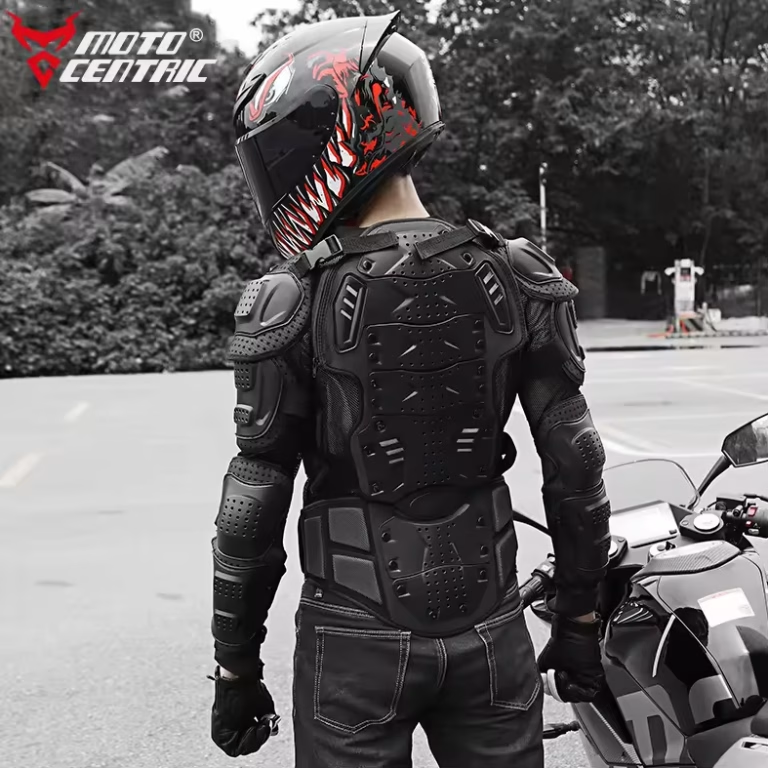
Hard armor — shoulder, elbow, knee, and back protectors — must come out before any wash. Water pressure and agitation shift armor inside pockets, stretching the pocket seams and sometimes cracking the armor plate itself if it flexes repeatedly against the drum wall.
How to Remove Armor from Motorcycle Gear
Locate all armor pockets — most jackets have shoulder, elbow, and back. Pants have knee and hip
Open velcro or zip closures on each pocket fully before pulling armor out
Note which armor goes in which pocket — back protectors and shoulder inserts are not interchangeable
Store armor flat during washing — stacking curved pieces under weight warps them permanently
Soft foam armor can tolerate a gentle hand wash separately if visibly dirty. Hard CE-rated plates should only be wiped with a damp cloth — never submerged.
How to Wash Kevlar Jeans
Kevlar jeans look like regular denim but the aramid fiber lining inside reacts very differently to heat and harsh chemicals than cotton does.
Step-by-Step Kevlar Jeans Washing
Remove all armor inserts from knee and hip pockets
Turn jeans inside out — protects the denim outer and reduces abrasion on the Kevlar lining
Set machine to cold wash — 30°C maximum. Heat above 40°C weakens aramid fiber bonds over repeated cycles according to DuPont Kevlar fiber care guidelines
Use a mild liquid detergent — powder detergent leaves residue in the Kevlar weave
Skip the spin cycle or set it to lowest speed — high spin distorts the lining position inside the denim
Line dry only — flat or hung from waistband in shade
Detergents to Avoid on Kevlar Jeans
Fabric softener — coats aramid fibers and reduces their abrasion resistance permanently
Bleach — degrades aramid fiber structure after a single use
Enzyme-based detergents — break down protein and fiber bonds over time
Colorfastness on Kevlar jeans denim is generally stable at cold wash temperatures. Hot washing causes dye bleed and fiber stress simultaneously — two problems in one cycle.
How to Wash a Textile Motorcycle Jacket
Textile jackets are the most complex to wash because they have three separate systems inside one garment — the outer Cordura shell, the waterproof membrane, and often a removable thermal liner. Each reacts differently.
Step-by-Step Textile Jacket Washing
Remove all armor — shoulders, elbows, back
Remove thermal liner if it unzips separately — wash liner and shell independently
Close all zippers and velcro before washing — open zippers snag the membrane during agitation
Machine wash shell at 30°C on a gentle cycle using a technical fabric cleaner such as Nikwax Tech Wash — standard detergents clog the membrane’s breathable pores
Run an extra rinse cycle — detergent residue in the membrane reduces waterproofing faster than washing itself
Line dry completely before re-attaching liner or storing
Dryer Heat Damage on Textile Jackets
Tumble drying a textile jacket on high heat does two things — it partially reactivates the DWR (Durable Water Repellent) coating on the outer shell, which sounds useful, but it also degrades the membrane bonding if the jacket isn’t fully designed for tumble drying. Check the label. If it says line dry only, that instruction exists because the membrane adhesive has a heat limit.
If re-proofing is needed after washing, apply a spray-on DWR treatment such as Nikwax TX.Direct Spray-On to the outer shell while still damp after washing. This restores waterproofing without requiring heat.
Waterproof Textile Longevity: What Actually Kills It?
The membrane doesn’t wear out from riding. It clogs from:
Body oils and sweat soaking through the inner lining into the membrane over months of unwashed use
Detergent residue blocking the microscopic pores that allow vapour out while keeping water out
Compression storage — folding a textile jacket tightly for months creases the membrane permanently in places
Washing a textile jacket every 8 to 10 rides rather than once a season extends membrane longevity significantly. According to Gore-Tex fabric care research, regular cleaning is the single biggest factor in maintaining waterproof membrane performance over time.
How to Wash Mesh Motorcycle Jackets
Mesh is the easiest material to wash and the easiest to damage through drying.
Step-by-Step Mesh Jacket Washing
Remove all armor
Machine wash at 30°C on gentle cycle — mesh polyester is stable at cold temperatures
Use any mild liquid detergent — mesh has no membrane to protect
Avoid high spin — distorts the panel shape and stresses seams at attachment points
Line dry in shade — never tumble dry, never dry in direct sun
Do Mesh Jackets Fade in Sun
Yes — and faster than most riders expect. Polyester mesh fades and loses tensile strength under prolonged UV exposure. The fading is visible. The structural degradation is not.
A mesh jacket dried repeatedly in direct sunlight degrades its UV protection rating and outer fiber strength simultaneously. After 18 months of sun drying, the seam strength on a mesh panel drops measurably even if the jacket looks acceptable. Dry in shade, store indoors, and the same jacket lasts significantly longer.
Mold Prevention — The Problem Nobody Talks About in Humid Climates
Storing motorcycle gear damp is the fastest way to develop mold inside the lining — particularly in textile jackets with thick inner liners and Kevlar jeans with tight aramid weave that traps moisture.
How to Prevent Mold in Motorcycle Gear
Never store gear in a sealed bag or box while damp — air circulation is essential
After riding in rain, hang gear open in a ventilated space for at least 12 hours before storing
Remove liner from textile jacket during storage in humid months — liner traps moisture against the membrane
If mold appears on textile outer shell, treat with a diluted white vinegar solution before washing — do not use bleach
Mold on Kevlar lining is harder to treat. If the aramid lining develops mold growth through persistent damp storage, the fiber bond is already compromised. Replacement is the safer option at that point.
How Often Should You Actually Wash Motorcycle Gear
Most riders wash gear too rarely, not too often:
Gear Type
Wash Frequency
Re-proof Frequency
Mesh jacket
Every 6–8 rides in summer
Not applicable
Textile jacket (shell)
Every 8–10 rides
Every 2–3 washes
Textile liner
Every 15–20 rides
Not applicable
Kevlar jeans
Every 5–8 rides
Not applicable
Washing too infrequently allows body oil and sweat to work into fabric and membrane over time — causing membrane clogging in textile gear and fiber stiffness in Kevlar lining. Neither condition reverses easily.
Quick Reference: What to Never Do with your Motorcycle Gear?
At Saribco Industries we manufacture across all three material types and the Motorcycle Gear Care instructions we include with every garment come directly from material testing, not from generic label copy. The washing mistakes in this blog are the ones we see reflected in warranty claims and early garment failure more than any other factor.
Gear that gets washed correctly at the right frequency outlasts motorcycle gear that gets ignored and washed occasionally at the wrong temperature by years.
Kevlar jeans in hot weather, mesh vs perforated leather heat, textile vent timing, UV damage on fibers — everything hot climate riders need to know before summer riding.
Textile jacket repair, zipper replacement, armor pocket fixes, and leather patching — what you can fix, what you can’t, and what it costs versus buying new.
Are textile jackets safe on highways? Are mesh jackets safe at speed? Real abrasion data, slide distances, women’s fit gaps, and honest material safety comparison.
Can you wear a mesh jacket in winter? Yes — if you layer correctly. Wind chill math, thermal base layers, liner compatibility, and what to wear under a textile jacket explained.
Step-by-step washing guide for Kevlar jeans, textile jackets, and mesh gear. Armor removal, detergents to avoid, drying methods, and how to stop membrane damage before it happens.
Mesh, Kevlar jeans, textile, or leather — which actually lasts longer and costs less per year? Real lifespan data, cost-per-year math, and material comparison no one else covers.